

MAKE 2026 aims to bring together a diverse group of researchers and practitioners to explore integrating machine learning and knowledge engineering in the development of knowledge-grounded semantic agents.
As artificial intelligence enters a new decade, research is returning to one of its most fundamental paradigms—agents and multi-agent systems—to build systems that can reason, plan, and act autonomously across digital and physical environments. Recent advances in large language models, multimodal perception, and generative AI have accelerated the rise of agents capable of tool use, communication, and complex task execution.
Yet many of these capabilities rely on approximate forms of reasoning and planning that remain insufficient for dependable decision-making. Integrating machine learning with explicit semantic knowledge structures—such as ontologies, knowledge graphs, and logical reasoning frameworks—offers a path toward agents that are verifiable, explainable, and aligned with human objectives.
This symposium will provide a forum for fostering collaboration between academia and industry, addressing the challenges of building semantic agents. The goal is to semantically advance agent architectures—including LLM, VLM, VLA, LxM, and multi-agent systems—to become knowledge-grounded, trustworthy, robust, interpretable, and capable of human-aligned reasoning and decision-making across diverse applications.
MAKE 2026 • AAAI Spring Symposium Series
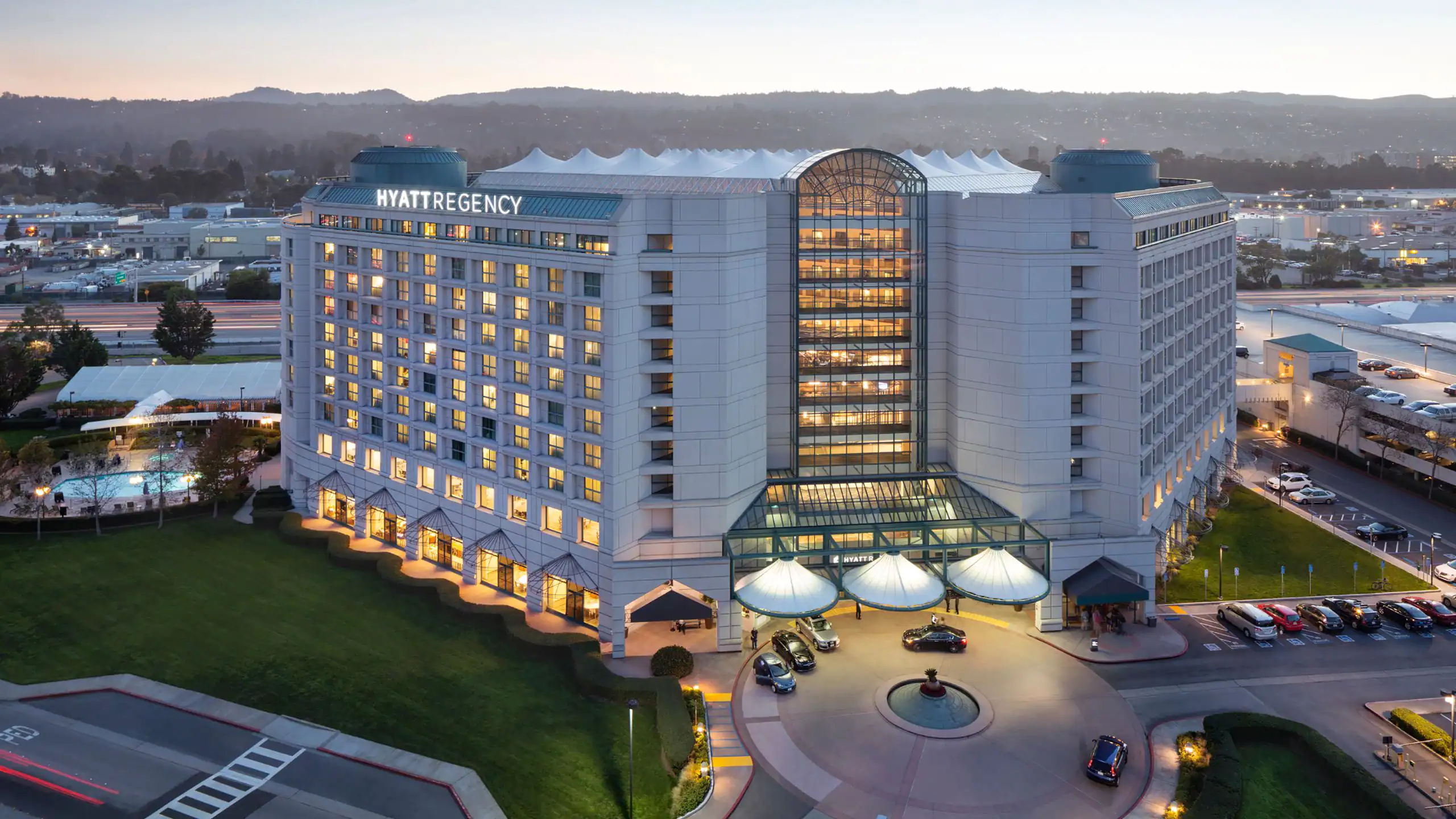
April 7-April 9, 2026 @ Hyatt Regency, San Francisco Airport | Burlingame, CA, USA
Topics
MAKE 2026 serves as a platform to shape the next generation of hybrid AI by bridging the gap between machine learning and knowledge engineering. It emphasizes grounding AI agents in explicit semantics and structured knowledge to achieve reliable, explainable, and human-aligned intelligence. Relevant topics include, but are not limited to:
- Machine Learning, Deep Learning, and Neural Networks
- Knowledge Engineering, Representation, and Reasoning
- Trustworthy, Commonsense, and Explainable AI
- Hybrid AI, Neurosymbolic, and Metacognitive AI
- Human-Centered AI, Dialogue Systems, and Conversational AI
- Generative AI and Large Language Models (LLMs)
- Semantic, Hybrid, and LLM-Based Agent Architectures
- Multi-Agent Collaboration, Communication, and Coordination
- Hybrid (Human–Artificial) Intelligence and Human-in-the-Loop AI
Format & Keynotes
The 2.5-day event will follow the traditional AAAI Spring Symposium Series schedule, with a diverse mixture of keynotes and morning and afternoon sessions.
- Peter Clark is Senior Research Director and a founding member at the Allen Institute for Artificial Intelligence (Ai2), where he also served as Interim CEO during 2022–2023. His research focuses on automated scientific discovery, knowledge representation and reasoning, and natural language understanding. He co-leads Ai2’s Asta Project, a large-scale initiative developing agentic frameworks for both assisted and automated scientific discovery. He has published over 250 papers, including five Best Paper awards, and is an ACL Fellow, Boeing Associate Technical Fellow, and Senior Member of AAAI. Furthermore, he was a founding member of the MAKE organizing committee in 2019.
- Title: Building Discovery Machines: Systematic Search, Structured Knowledge, and the Outer Loop of Long-Horizon Research Agents
- Abstract: LLMs can now read papers, write code, analyze datasets, and generate reports, thus performing substantial portions of the scientific workflow. Yet executing a single experiment is quite different from conducting long-horizon research. In this talk I’ll present our work on Asta, an AI research assistant that supports and partially automates scientific discovery, and aspires to scale to long-term projects. In particular, I will argue that successful long-horizon research agents require more, not less, explicit knowledge representation and systematic exploration. I’ll distinguish between the inner loop (single experiment) and the outer loop of research, where the latter involves generating, revising, and testing (via the inner loop) hypotheses, and requires representing both the evolving knowledge state and research state. I’ll illustrate and discuss two examples of the “outer loop”. First, Asta’s AutoDiscovery agent performs systematic search over a structured hypothesis space, using the notion of “LLM surprise” to find insights. Second, exploring more open-ended iterative search with Asta, we find agents can quickly meander or compound errors unless they maintain organized representations of the state of knowledge (what is currently known) and research (what is currently done). This suggests that building discovery machines is not just about building bigger models, but finding the right architecture that blends language, code, and structured knowledge representations together in an effective way.
Submission
We solicit paper and non-paper contributions presenting recent or ongoing research, surveys, and dataset-related challenges.
- Paper contributions: Full papers (6 to 8 pages plus 1–2 pages for references) and position or short papers (2 to 4 pages plus 1 page for references) will undergo a single-blinded review by the program committee. Accepted papers shall be published as part of the “Proceedings of the AAAI Symposium Series” by the AAAI Library. Authors of accepted papers may be invited to submit an extended version to a special issue of the Neurosymbolic Artificial Intelligence journal.
- Paper abstract submission: January 23, 2026 (AoE)
- Paper submission: January 30, 2026 (AoE)
- Paper notification (extended): February 20, 2026
- Early/discounted registration fee: February 27, 2026 (ET)
- Camera-ready paper submission (extended): March 6, 2026 (AoE)
- Non-paper contributions: Journal article presentations allow researchers to present and discuss related, recently published, peer-reviewed journal articles. Posters enable sharing of early-stage work, preliminary results, or emerging ideas. Industry tutorials offer a venue for showcasing applied research contributions, systems, or demonstrations. Discussion proposals invite well-defined topics intended to stimulate focused debate or collaborative exploration. Non-paper contributions are submitted as an abstract (up to 2 pages including references) and will be reviewed by the organizing committee for topical fit.
- Non-paper abstract submission: February 13, 2026 (AoE)
- Non-paper notification: February 20, 2026
- Early/discounted registration fee: February 27, 2026 (ET)
All submissions must follow the AAAI author-kit formatting instructions and be submitted through the AAAI EasyChair site.
Organizing Committee
Andreas Martin (primary contact, 📧), FHNW, Olten, Switzerland
Pedro A. Colon-Hernandez, Apple, Mountain View, CA, USA
Maaike de Boer, TNO, The Hague, Netherlands
Hans-Georg Fill, University of Fribourg, Switzerland
Aurona Gerber, Stellenbosch University, South Africa
Leilani H. Gilpin, University of California, Santa Cruz, CA, USA
Pascal Hitzler, Kansas State University, Manhattan, KS, USA
Jane Yung-jen Hsu, Chang Gung University, Taoyuan, Taiwan
Yen-Ling Kuo, University of Virginia, Charlottesville, VA, USA
Emanuele Laurenzi, FHNW, Olten, Switzerland
Alessandro Oltramari, Carnegie Bosch Institute, Pittsburgh, PA, USA
Thomas Schmid, Martin Luther University Halle-Wittenberg, Germany
Paulo Shakarian, Syracuse University, NY, USA
Reinhard Stolle, Fraunhofer IKS, München, Germany
Frank van Harmelen, Vrije Universiteit Amsterdam, Netherlands